

Kindness resolutions for kids work best when they are small, specific, and easy to repeat. In this guide, you will help your child or students pick 1–3 “I will…” kindness goals, choose a simple way to track them, and do a quick weekly reset so no one feels stuck or guilty.
If you want a simple way to remember and track kindness goals in one place, you can use our kindness tracker app as your “Light” to stay consistent without adding more work.
A kindness resolution is not about being perfect. It is practice. Kids learn kindness the same way they learn reading or sports: with small reps, gentle reminders, and chances to try again.
Kindness Resolutions At A Glance
You do not need a long worksheet or a big family meeting. Most kids do better with a quick start and a simple routine that repeats.
- Ages/Grades: Pre-K–5 (with easy tweaks for middle school)
- Time: 10–15 minutes to set up, 2–5 minutes daily, 10 minutes weekly
- Prep Level: Low-prep
- Materials: Paper + marker, sticky notes, or a simple calendar (optional: a jar/envelope for cards)
If you are doing this in a classroom, this can fit into Morning Meeting or closing circle. If you are doing it at home, dinner or bedtime is usually the easiest place to make it stick.
What Is A Kindness Resolution
A kindness resolution is a small, specific promise a child practices daily or weekly to help others, include others, and use kind words and actions.
It is different from a big New Year goal like “get better at math” because kindness can happen right away. Kids can do it today, then do it again tomorrow, even if the day is busy.
Why “Kindness” Works Better Than Big New Year Goals For Kids
Kindness goals are easier for kids because they are action-based. A child can say, “I will invite someone to play,” and then do that one thing at recess. That feels possible.
Kindness also builds SEL skills quietly. When kids practice kind actions, they also practice empathy, self-control, and noticing other people’s feelings, without needing a lecture.
What To Avoid
Avoid goals that are too vague, like “be nicer.” Kids usually want to do well, but they do not always know what “nicer” looks or sounds like in the moment.
Also avoid goals kids cannot control, like “my sister will stop bothering me.” A better goal is something your child can do, like “I will use a calm voice and ask for space.”
How To Choose Kindness Resolutions Kids Can Actually Keep
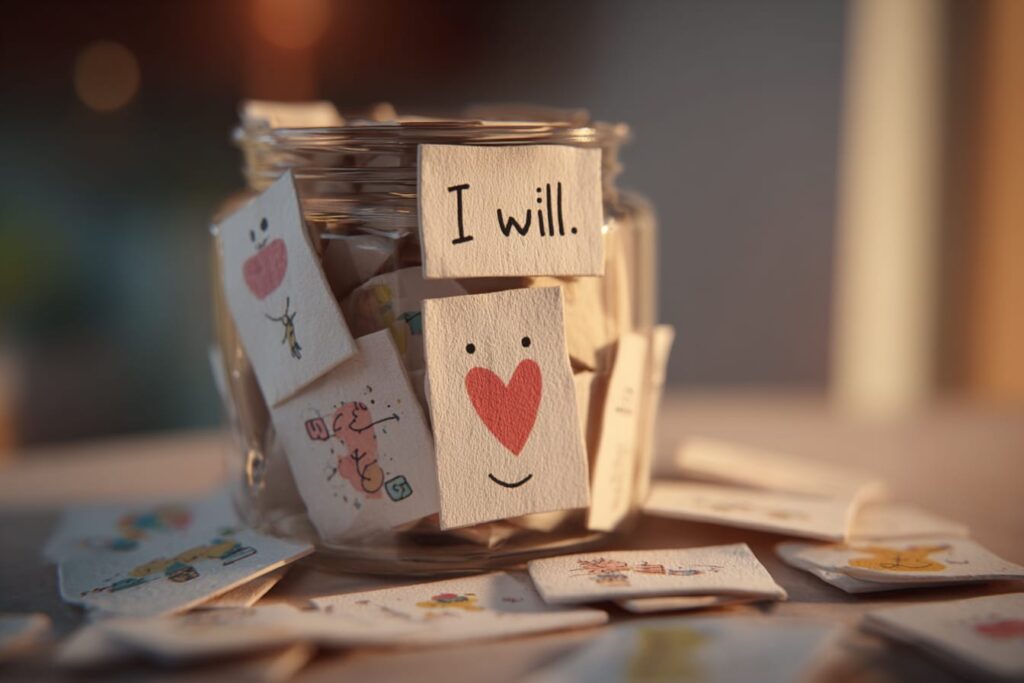
The best kindness resolutions feel almost too easy. That is a good sign. When the goal is small, kids can repeat it until it becomes a habit.
Start by reminding kids that kindness can be quick. A smile, a helpful hand, or a kind sentence counts. You are building a routine, not a performance.
The 3-Rule Filter (Simple And Repeatable)
Use this filter to choose goals that last past the first week of January.
- Small: It takes 2 minutes or less.
- Specific: You can see it or hear it.
- In My Control: The child can do it without someone else changing.
If a goal does not fit the filter, shrink it. “I will be kind all day” becomes “I will say 1 kind thing at breakfast.”
Set Kindness Resolutions In 10 Minutes
You can do this with one child, siblings, or a whole class. Keep the pace light and positive.
- Brainstorm 6–10 kind actions.
Write fast ideas like “help,” “include,” “thank,” “share,” and “encourage.” - Circle 2 favorites.
Kids choose better when they pick from their own list. - Rewrite as “I will…” statements.
Example: “I will say thank you to 1 helper each week.” - Pick a “when.”
Morning, recess, after school, dinner, or bedtime. - Choose a tracking method.
Keep it simple. A check mark is enough. - Choose a weekly reset day.
Sunday night, Monday morning, or Friday afternoon works well.
If you are doing this in a classroom, give students a private way to track if they prefer. Some kids love sharing goals. Others do better keeping it quiet.
A Quick Breakdown
This quick table helps you match goals to age and give the right amount of support. Younger kids often need “say the words” practice. Older kids do better with choice and privacy.
| Age/Grade Band | Example Kindness Resolution | Simple Adult Support |
| Pre-K / K | “I will say hello to 1 person.” | “Let’s practice 1 friendly greeting.” |
| Grades 1–2 | “I will include someone at play.” | “Who might want a partner today?” |
| Grades 3–5 | “I will help without being asked.” | “What is 1 helpful job you can do?” |
| Middle School | “I will do 1 quiet kind act weekly.” | “What feels real, not cheesy?” |
You can also let kids pick one “people kindness” goal and one “home kindness” goal. That balance makes it easier for them to succeed in different settings.
Kindness Resolution Ideas For Kids
These ideas work best when you choose just a few and repeat them. A kindness resolution should be a habit you can do again and again, not a long list you forget.
If your child struggles to choose, offer a simple menu: “Do you want your kindness goal to be about words, helping, or including?”
At Home
Home goals work best when they connect to the moments that already happen every day. A child does not need extra time. They need a clear action.
Try these repeatable “home kindness” resolutions:
- “I will use kind words with my family at dinner.”
- “I will help with 1 small job each day.”
- “I will say 1 thank-you each day.”
If siblings are in conflict, choose one goal that reduces heat. “I will use a calm voice” is often a better starting point than “I will share,” because it supports self-control first.
At School
School kindness goals should fit real school life. Kids do better when the goal matches a predictable moment like arrival, recess, or group work.
Try these school-friendly resolutions:
- “I will invite someone to join my game once a week.”
- “I will give 1 kind compliment each day.”
- “I will fix it fast if I hurt someone’s feelings.”
For classrooms, you can also make a class goal like “We will notice who is alone.” That helps kids who feel shy about a personal resolution.
In The Community
Community goals help kids see that kindness belongs everywhere, not just at home or school. Keep these goals simple and appropriate for your setting.
Try:
- “I will thank a helper (mail carrier, cashier, coach) once a week.”
- “I will make 1 kind card each month.”
- “I will choose 1 item to donate each month (if our family does donations).”
If donations are not part of your family routine, choose a “words goal” instead. Thanking people is free and powerful.
Self-Kindness (Important And Age-Appropriate)
Self-kindness is not selfish. Kids need it to handle mistakes and keep trying. When kids learn self-kindness, they also learn better repair and better empathy.
Try:
- “I will take 3 slow breaths when I feel upset.”
- “I will say, ‘I can try again,’ when I make a mistake.”
- “I will ask for help with respectful words.”
If a child tends to melt down, start with one small regulation goal. Calm bodies make kind choices easier.
If you want a bigger “idea bank” to choose from, use this list as a menu and turn your favorites into repeatable resolutions: acts of kindness list.
Make It Stick Without Bribes

Kids do not need prizes to practice kindness, but they do need structure. The structure should feel supportive, not like a scoreboard.
A good tracking system answers one question: “Did we practice today?” That is it. You can celebrate effort without turning kindness into points.
Choose A Tracking Method That Fits Your Kid
Pick the simplest method your child will actually use. If tracking feels like a chore, it will disappear.
Easy options:
- Check mark calendar: One check per day or week.
- Kindness jar: Add a bead or pom-pom when you try.
- Kindness card flip: Keep 3 cards and flip one when it happens.
- Quick app tracking: If you prefer digital, keep it simple and consistent with our kindness tracking app.
No matter what you choose, praise the process. Say, “I noticed you tried,” instead of “You got all your checks.”
A Weekly “Reset” Script (2 Minutes)
A weekly reset keeps kids from giving up after a hard day. Keep your tone calm and curious.
Try this:
- “What went well?”
- “When was it hard?”
- “What is one tiny change we can try next week?”
This works for families and classrooms. You are teaching reflection, not judgment.
When Kids Forget
Forgetting is normal. The goal is to make kindness easier to remember, not to add pressure.
Use cues and routines:
- Put a sticky note by the door or on the lunchbox.
- Tie the goal to a daily habit like brushing teeth.
- Shrink the goal again until it feels doable.
If a child says, “I don’t want to,” offer choice. “Do you want to do a kindness goal with words, helping, or including?” Choice lowers resistance.
Classroom Version
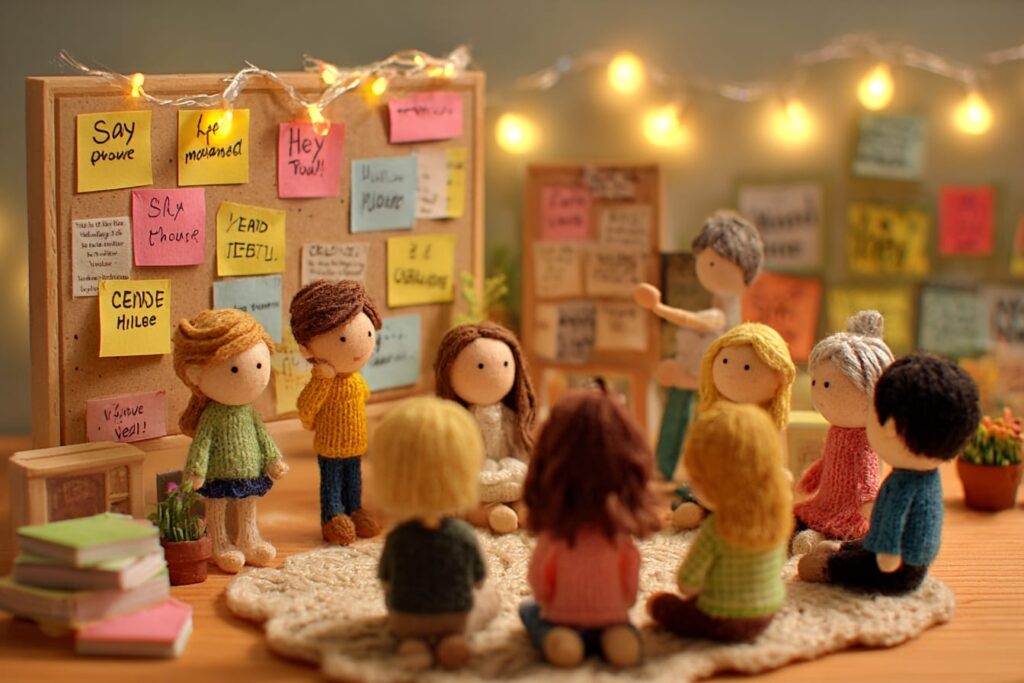
Kindness resolutions can work well as a classroom routine because they are short and repeatable. Students also benefit from seeing that kindness is a shared value, not just a private goal.
Keep the language simple and inclusive. Focus on practice. Avoid turning it into a public competition.
15-Minute Daily Routine (Works As Morning Meeting Or Closing Circle)
This routine fits into real school days. You can do it 3–5 days a week and still see results.
- 3 minutes: Name the kindness focus (words, helping, including).
- 5 minutes: Role-play one real scenario (recess, group work, line-up).
- 5 minutes: Students choose a “today kindness move.”
- 2 minutes: Quick reflection or quiet shout-outs.
If you want a full classroom plan with examples, scripts, and pacing, use this guide: classroom kindness challenge.
Keep It Inclusive (Avoid Calling Kids Out)
Some students love sharing a kindness goal. Others feel anxious if attention lands on them. Offer both options.
Ways to keep it inclusive:
- Let students track privately.
- Use small partner shares instead of whole-group shares.
- Celebrate repair, not perfection.
If a student makes an unkind choice, treat it as a learning moment. Practice the “fix it” words. Then move forward.
Family Version
At home, kindness resolutions work best when they feel like part of your family rhythm. You are not adding a new “program.” You are choosing a small family habit.
Keep it short and consistent. If you miss a day, reset and continue. Kids learn a lot from how adults handle imperfect routines.
Where To Fit It In (Choose 1)
Pick one spot in the day when you can repeat the same question. Repetition makes it stick.
Good options:
- Dinner: “What kindness did you practice today?”
- Bedtime: “Who did you help today?”
- Car ride: “What kindness move will you try tomorrow?”
If your evenings are chaotic, try mornings. A 10-second plan at breakfast can help kids remember later.
Make It Collaborative
Kids follow through more when adults model the same skill. Keep the adult goal small so it feels real, not performative.
Try:
- Parent goal: “I will use a calmer voice during homework time.”
- Child goal: “I will ask for help respectfully.”
- Family goal: “We will notice who needs help this week.”
If siblings fight, try a teamwork goal that feels safe. “We will do one kind thing for each other each week” can work better than daily expectations.
Optional Craft Extension
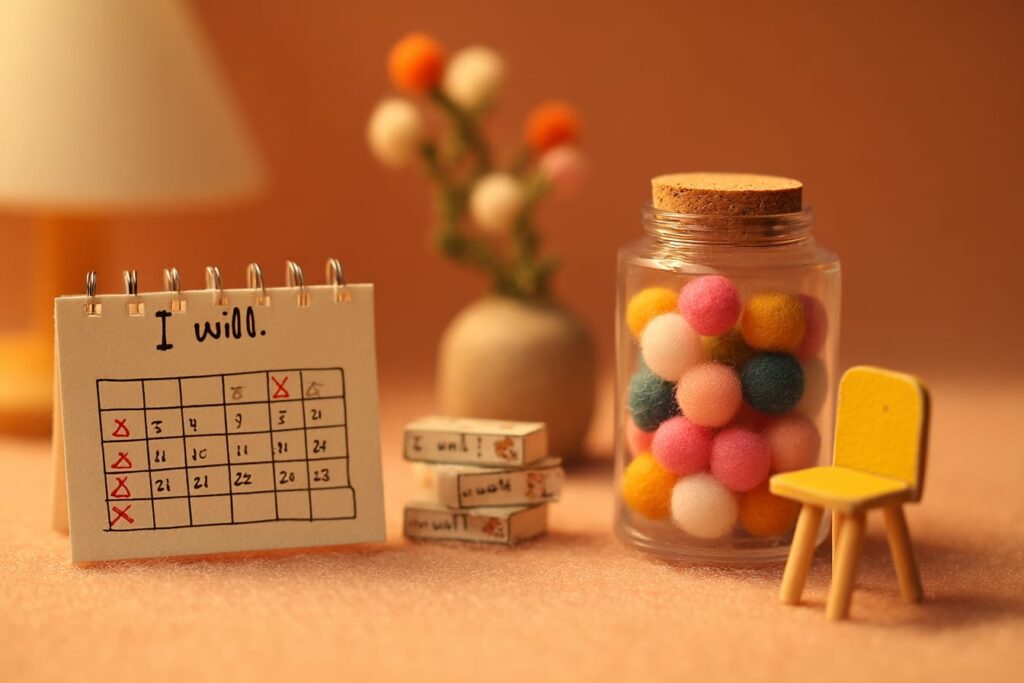
Crafts can make kindness resolutions feel concrete. Kids like holding something they made. Keep the craft low-prep and kid-safe.
The craft should support the habit, not replace it. The resolution still needs a simple routine to continue after the craft is finished.
Kindness Resolution Cards (10–15 Minutes)
Write 1 resolution per card. Keep the words short. Younger kids can draw the action instead of writing it.
Steps:
- Cut paper into small cards.
- Write “I will…” on the top.
- Add a simple picture (heart, helping hands, smile).
- Store cards in a jar or envelope and review once a week.
This works well for classrooms too. Students can keep cards in a desk folder for private tracking.
Kindness Chain (Weekly Links)
A kindness chain makes progress visible without scoring kids. It also works well on a classroom wall or a hallway bulletin board.
How to use it:
- Add 1 link each week for effort.
- Write a short reflection on the back: “I included someone at recess.”
- Keep the chain growing all year, not just in January.
If you want more low-prep options, browse our printable kindness crafts and pick one that matches your setting.
Connect It To A Story
Stories help kids understand why kindness matters. A story also gives you shared language, which makes reminders feel softer and more meaningful.
You can connect kindness resolutions to a read-aloud at the start of the year, then revisit the themes during your weekly reset.
Use A Read-Aloud To Make The Resolution Feel Meaningful
When kids see kindness in a story, they can picture themselves doing it. That makes the resolution feel like a choice they want to practice, not a rule they must follow.
If you want a story connection that fits kindness, empathy, and giving, explore our Christmas kindness book and use it as a gentle anchor for discussion.
Discussion Prompts (Home Or Classroom)
Use short prompts that invite reflection, not “right answers.” One prompt is enough for a day.
Try:
- “What is a small kind action that can change someone’s day?”
- “What do we do when we mess up?”
- “How can we include someone new?”
- “What kind words help you when you feel upset?”
For older kids, ask about real-life moments. “What makes kindness feel awkward sometimes?” That can lead to honest, useful conversations.
Wrap-Up And Next Step
Kindness resolutions for kids work when they are small, specific, and repeated. Choose 1–3 goals, connect them to a routine, and use a weekly reset to keep the tone supportive.
If you want a simple “Light” that helps you remember and track kindness goals without building your own system, use the Christmas Tree of Kindness app to keep everything in one place.
Frequently Asked Questions
Kindness resolutions for kids are small “I will…” goals that help children practice kind words and actions daily or weekly. They work best when they are specific, short, and easy to repeat.
Most kids do best with 1–3. Too many goals are hard to remember and easy to abandon, especially after the first busy week.
Choose something concrete like “I will say hello,” “I will share,” or “I will use kind words at dinner.” If needed, practice the words together before the day starts.
Use check marks, a kindness jar, or a short weekly reflection. Praise effort and repair instead of perfect streaks or points.
Yes. Keep it short, use role-play, and give students private tracking if they prefer. Focus on inclusion and “fix it” skills rather than calling students out.
Shrink the goal, add a reminder cue, and reset weekly. One missed day is normal. The habit grows with gentle repetition.
Yes. Give choice and privacy. Older kids often prefer “quiet kindness” goals like helping at home, including someone new, or doing one kind act each week without announcing it.