

December in the classroom is magical… and exhausting. You’re juggling concerts, assessments, behavior blips, and a to‑do list that never seems to end. Adding “one more thing” can feel impossible—even when that “thing” is kindness.
If you’ve ever typed “classroom kindness challenge how to” into a search bar and then closed the tab because it all looked like too much work, this guide is for you.
This is a simple, low‑prep classroom kindness challenge you can run in just 15 minutes a day. It fits into your existing routines (morning meeting, after recess, end‑of‑day circle) and helps students practice empathy, gratitude, and inclusion—without you staying late to cut out a thousand things.
You’ll get:
- A clear, repeatable 15‑minute daily routine
- A list of ready‑to‑use kindness ideas
- Ways to track progress with a simple chart, a printable kindness tree, or the Christmas Tree of Kindness app
- Tips to adapt the challenge for different grade levels and needs
Let’s walk through this classroom kindness challenge how to from start to finish.
Why a Kindness Challenge Matters
Before we dive into the “how,” it helps to know why this is worth your precious minutes.
Social-Emotional Superpowers
A daily kindness challenge gently builds:
- Empathy – Students think about how others feel and what might brighten their day.
- Inclusion – Intentional acts (like inviting someone to join a game) reduce loneliness and cliques.
- Confidence – Students discover they have real power to make a difference.
Instead of only correcting unkind behavior, you’re spotlighting positive actions and letting kindness be something everyone practices together.
Better Classroom Climate (and Academics)
You know this already: when students feel safe and cared for, everything else goes better.
A short daily kindness routine can:
- Calm the energy after busy transitions
- Give students a positive role to play in the classroom
- Reduce small conflicts because kids are actively looking for ways to help
- Sneak in literacy: writing notes, reading prompts, sharing reflections
Why 15 Minutes Is Enough
Big changes don’t always need big chunks of time. What students remember most are the small things you do consistently.
A 15‑minute block is enough to:
- Introduce a simple act
- Let students try it
- Reflect and celebrate together
Once the routine is in place, it actually saves you time: fewer behavior reminders, smoother transitions, and a shared focus on something positive.
Step 1: Plan Your Classroom Kindness Challenge

Here’s the planning side of “classroom kindness challenge how to.” The goal is to design something that fits your class—not the other way around.
Choose Your Timeframe
Pick a length that feels realistic:
- One week (5 days) – A great starter challenge
- Two to three weeks – Enough time to build a habit
- Full month or Advent countdown – For a bigger seasonal focus
Then choose where it will live in your schedule:
- Morning meeting
- After lunch or recess
- Last 15 minutes of the day
Tie it to something you already do so it doesn’t feel like an add‑on.
Define the Goal
Keep it clear and simple:
- “We will complete 10 acts of kindness together.”
- “We will try one new kindness act each school day until break.”
- “We will fill our kindness tree with 20 ornaments.”
Focus on effort and participation, not on being perfect. Make it a whole‑class goal, not a competition between students.
Decide How You’ll Track Kindness
You have three easy options:
- Paper kindness tree
- Draw or print a tree and add paper ornaments or hearts as you go.
- This works beautifully on a bulletin board.
- Class kindness tree in the app
- Use the Christmas Tree of Kindness app to create one shared tree.
- Add acts as “ornaments,” invite students to view or join, and celebrate when the star appears.
- Simple chart or sticky‑note wall
- Make a table on chart paper: Date • Kindness Act • How It Felt.
- Or devote a space on the wall for “Kindness Notes” students can add.
Pick whichever feels easiest to maintain on your busiest days.
Step 2: Gather Low‑Prep Materials

This challenge can be almost zero‑prep, but a few things help it run smoothly.
Core Materials
- A visible spot for your Kindness Tree or chart
- A list of age‑appropriate kindness ideas (you’ll have plenty in this post)
- A timer (phone or classroom timer) to keep you honest about the 15 minutes
Optional (But Fun) Extras
- Printable kindness ornaments and tree from your Craft Activities page
- The Christmas Tree of Kindness app projected on your board or on devices
- Simple reflection pages or journals where students can write one or two sentences: “Today I chose kindness by…”
Think About Access & Needs
- Can students leave the room unsupervised? If not, keep acts in‑class or during supervised transitions.
- Which students might need “quiet kindness” options—tidying, drawing, writing notes—instead of high‑social tasks?
- Are there sensory or mobility needs to consider when you choose acts?
A little thought up front makes the challenge smoother and kinder for everyone.
Step 3: The 15-Minute Daily Routine
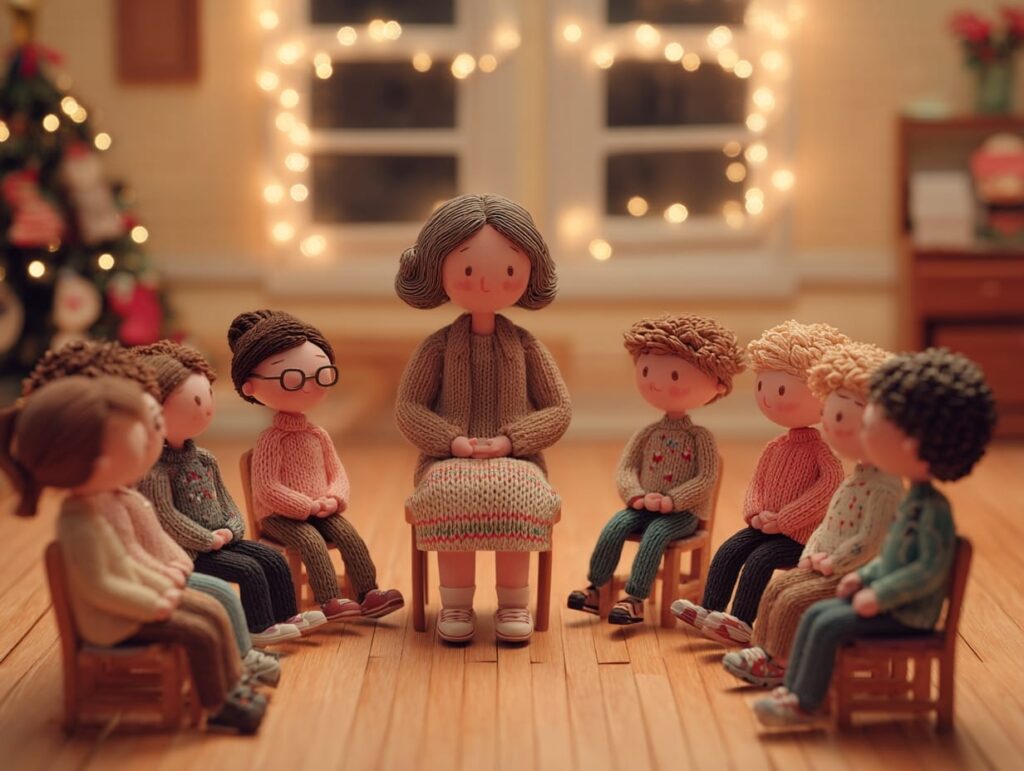
This is the heart of the classroom kindness challenge how to: a three‑part routine you can rinse and repeat.
Minutes 0-5: Introduce Today’s Kindness Act
- Remind students of your overall goal (“We’re filling our kindness tree with 15 ornaments by winter break”).
- Share one specific act for the day. For example:
- “Today we’re going to compliment three classmates.”
- “Today we’re going to thank a staff member.”
- Ask a quick question or do a tiny role‑play:
- “What’s the difference between a kind compliment and a silly one?”
- “How can we thank our custodian in a way that feels respectful?”
Optional: Let a student leader come up front to read the act aloud.
Minutes 5-10: Kindness in Action
Depending on the act, students will:
- Act right away in the classroom – writing notes, tidying areas, pairing up, drawing signs.
- Plan for the next transition – including someone new at recess, holding doors on the way to lunch, thanking the bus driver on the ride home.
You can:
- Walk around and notice kind actions.
- Offer a backup option for anyone who’s unsure:
- “If you’re not ready to compliment a classmate, you can write a thank‑you note to a staff member instead.”
Minutes 10-15: Reflect & Add to the Tree
Bring everyone back together for a short reflection:
- Ask 2-4 students to share:
- “What kindness did you choose today?”
- “What changed in our classroom because of it?”
- Add one ornament or symbol to your paper kindness tree, or log the act in the app.
- Optionally, record how many acts were completed (“We did 22 acts of kindness this week!”).
End with something tiny but consistent:
- A “Kindness cheer” (quick clap pattern, class chant).
- A quiet moment: “Think of one person you’re glad is in our class.”
That’s it. Fifteen minutes, done.
Step 4: 20 Easy Kindness Ideas for Your Classroom Challenge

To save your brainpower, here’s a ready‑to‑go idea bank you can plug into your routine.
Kindness to Classmates
- Invite someone new to join your game or group.
- Write a positive sticky note and secretly place it on someone’s desk.
- Compliment three classmates about something specific they do well.
- Help a classmate clean up their area or organize a messy bin.
Kindness to School Staff
- Make thank‑you notes or a big card for custodians.
- Deliver a kind message to office staff at the front desk.
- Create bookmarks or notes of appreciation for the librarian.
- Say “thank you” to the bus driver by name.
Kindness for Younger Students
- Visit a younger class as reading buddies.
- Be line leaders or hallway helpers for them on a special day.
- Draw encouraging pictures for their door or hallway.
- Show a younger student how to do a task (with teacher guidance).
Kindness to the Community & Environment
- Pick up litter on the playground (with gloves and permission).
- Make “You are loved” or “You belong here” posters for school halls.
- Design gratitude snowflakes or stars using scrap paper.
- Turn off extra lights/devices for an hour to save energy.
You can mix and match these ideas into a 5‑day or 10‑day plan and repeat with variations through December.
Step 5: Tracking Progress & Celebrating

Keeping track of the challenge makes kindness feel real and visible.
Option A: Paper Kindness Tree
- Print or draw a big tree on a bulletin board.
- Each day, add:
- An ornament for the act you focused on
- Or one leaf/heart per student who participated
- Label ornaments with the date and act (“Complimented classmates,” “Thanked our custodian”).
This turns your wall into a living record of your challenge.
Option B: Class Tree in the App
If you use the Christmas Tree of Kindness app:
- Create one class tree.
- Add the kindness acts you plan to do.
- Each day, tap to mark them as complete.
- Show the tree on your projector so students see the ornaments appear.
When the tree is finished, the star and music make a fun (and free) celebration moment.
Option C: Journals & Exit Tickets
For a reflective twist:
- Have students keep a kindness journal or a simple stapled booklet.
- Each day, they write one sentence:
- “Today I chose kindness by…”
- “Today’s kindness made me feel…”
This is great SEL evidence and can be shared with families or at conferences.
End-of-Challenge Celebration Ideas
At the end of your challenge, celebrate:
- A Kindness Party with games and stories instead of treats
- A compliment circle where each student hears something kind about themselves
- A slideshow or bulletin board of kindness photos and notes
- A special read‑aloud of your Christmas Tree of Kindness storybook to tie it all together
Step 6: Adapting Your Challenge by Grade Level
Every class is different. Here’s how to make the same structure work from K-6.
Kindergarten-Grade 1
- Use picture prompts or icons for each act.
- Model the act yourself first (“Watch how I invite someone to play”).
- Keep reflection simple: thumbs up/down, “happy/sad” faces, or one‑word responses.
- Choose very concrete acts like helping tidy, saying hello, or drawing a picture.
Grades 2-3
- Add short writing to reflection: one sentence or a sentence starter.
- Let students suggest kindness ideas, then pick from their list.
- Introduce simple leadership roles like Kindness Captain to read the act or add ornaments.
Grades 4-6
- Go deeper with reflection:
- “How did this change our class today?”
- “What was hard about today’s act?”
- Let small groups plan a day of the challenge (with your approval).
- Encourage students to notice kindness outside class and share it with the group.
Inclusion & Neurodiversity
For students who find social tasks hard:
- Offer “quiet kindness” options like straightening bookshelves, drawing encouraging posters, or writing notes.
- Let them opt out of speaking in front of the class, but still contribute in their own way.
- Provide a visual schedule of upcoming acts so they know what’s coming.
Step 7: Classroom Management & Troubleshooting
Even the best ideas meet real‑life classroom moments. Here’s how to handle a few common bumps.
When Students Get Silly or Performative
- Gently remind them: Kindness is about helping, not showing off.
- Offer more anonymous acts (secret helper, hidden notes).
- Do a quick role‑play of “fake” vs. “real” kindness and let students name the difference.
When Time Is Tight
On wild days, switch to a 5‑minute micro‑routine:
- Announce the kindness act.
- Students do it during their next transition.
- At day’s end, ask one or two students to share and add an ornament.
You’re still keeping the thread of the challenge without adding stress.
When Some Students Resist
- Start with low‑pressure acts (tidying, notes, posters).
- Offer choice: “You can do A or B today.”
- Ask privately, “What kind of kindness feels comfortable for you?” and honor that answer.
Keeping It Fair & Inclusive
- Rotate who gets to:
- Pick the act
- Add ornaments
- Lead the cheer
- Highlight group progress (“We did this together”), not just individual “stars.”
Step 8: Sample 5-Day Classroom Kindness Plan
Here’s a plug‑and‑play mini‑plan you can start as soon as tomorrow.
Day 1: Compliment 3 classmates
- Introduce what makes a good compliment (specific, kind, true).
- Students give three compliments during the day.
- Reflect and add an ornament.
Day 2: Thank a staff member
- Choose one group (custodians, office staff, cafeteria, bus drivers).
- Make quick notes or a shared card.
- Deliver together if possible.
Day 3: Classroom clean‑up challenge
- Set a 5‑minute timer to tidy a specific area.
- Notice how the room feels afterward.
- Add a “We care for our classroom” ornament.
Day 4: Include someone new at recess or in group work
- Talk about what inclusion looks like.
- Students try it during recess or group time.
- Reflect the next day.
Day 5: Make cards for younger students or seniors
- Create simple, cheerful cards.
- Deliver to a younger class or drop at the office for a local senior home.
You can repeat this 5‑day cycle with new acts, stretch it into 10 days, or build a longer plan using the idea bank above.
Small Acts, Big Impact
You don’t need a giant program to grow kindness in your room. A simple classroom kindness challenge, run in just 15 minutes a day, can change the way students see themselves and each other.
Start with one week. Choose a time of day, pick a few acts from this guide, and try the routine. Add a paper kindness tree or a shared tree in the Christmas Tree of Kindness app so students can see their impact grow.
One small act, one small ornament, one small celebration at a time…
your students will learn that they have the power to make your classroom the kindest place in school.
FAQs: Classroom Kindness Challenge How To
Whatever you can realistically maintain—5 days, 10 days, or a full month. It’s better to run a short, successful challenge than a longer one that fizzles out.
Absolutely. You can run a kindness challenge in January as a “fresh start,” in February for Friendship/Kindness month, or any time your class needs a reset.
No. You can run it with just chart paper or a bulletin board. The Christmas Tree of Kindness app simply gives a fun visual way to track acts and celebrate with a digital tree.
Focus on kindness as a universal value. You can call it a “Kindness Challenge” or “Kindness Tree” without mentioning specific holidays.
Offer alternative acts, honor their comfort level, and keep the tone positive—not punitive. Over time, many reluctant students join in when they see others enjoying it.